Operations · 8 min read · Sep 16, 2026
They compare app counts. You pay for billing units.
Search this comparison and you get the same table everywhere: app counts, a pricing column, a note about ease of use. Two of those three columns barely affect what you end up paying, and the column that does is usually a footnote.
The column that decides the bill
These platforms do not bill on the same unit, and the difference compounds with every step you add to a workflow. Zapier bills per task — each action inside a workflow. n8n bills per execution — the whole workflow counts as one.
So a ten-step workflow running ten thousand times a month is 100,000 billable units on one model and 10,000 on the other. The commonly cited figure for that shape is an 80–90% cost difference, and it comes from the billing unit alone, not from any capability. Digidop's comparison and Intuz's both walk the arithmetic.
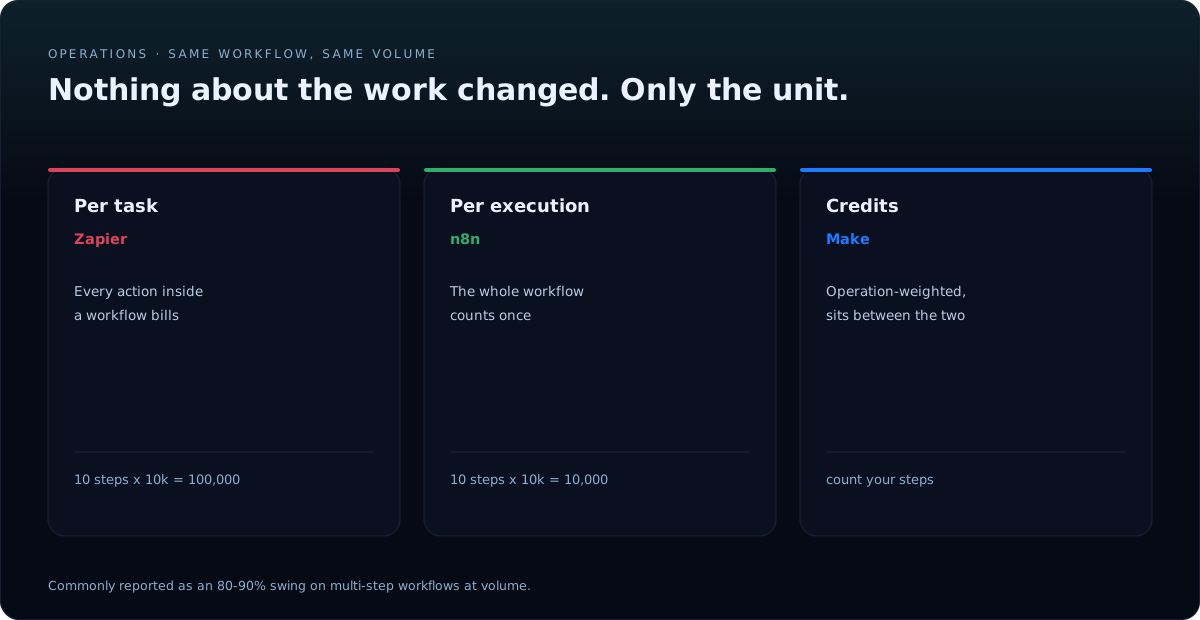
Before comparing prices, work out how many steps your typical workflow has. That number, not the sticker price, decides which platform is cheap for you.
App counts are a vanity metric
Zapier lists 7,000+ apps, Make around 3,000, n8n roughly 400 official nodes. Those numbers do a lot of work in comparison tables and almost none in practice, because you will connect somewhere between four and twelve systems and then stop.
The question worth asking is not how many integrations exist but whether the specific six you need are supported at the depth you need — which is usually not the same thing. A connector that can create a record but not update one, or that exposes twenty fields of a forty-field object, is counted in the headline number and will still block you. Check your six by name before reading any total.
What the tables get right
| Zapier | Make | n8n | |
|---|---|---|---|
| Billing unit | Per task | Credits | Per execution |
| Listed integrations | 7,000+ | ~3,000 | ~400 nodes |
| AI layer | Agents + AI Actions, add-on | Maia, builds from prompts | Native, 70+ AI nodes |
| Self-hosting | No | No | Yes, fair-code |
| Learning curve | Lowest | Middle | Steepest |
| Suits | Non-technical teams | Visual builders, mid-complexity | Technical teams, sovereignty |
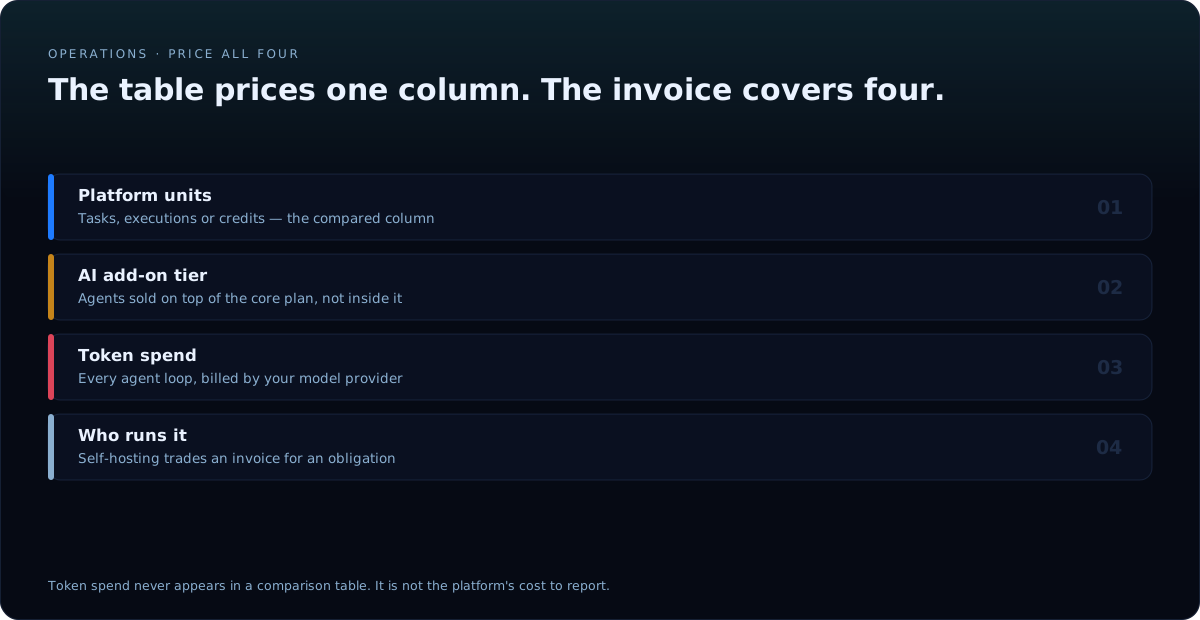
One detail in that table is routinely missed by buyers: Zapier's AI capability lives mainly in Agents and AI Actions, sold as a layer on top of the core plan rather than included in every workflow. A price comparison against a platform with AI in the base product is not comparing like with like.
Self-hosting is a staffing decision, not a savings one
n8n's self-hosted model is genuinely attractive for cost predictability and data sovereignty, and it is the reason it gets recommended for regulated work. It also carries the steepest learning curve in the category, and teams without a developer reliably spend meaningful time on infrastructure they did not budget for.
So the honest framing is a trade, not a win: you are exchanging a per-task invoice for an operational obligation. If nobody on the team owns that obligation by name, the invoice was the cheaper option. The same reasoning applies to models, and we worked it through in local models vs frontier APIs.
The line item nobody puts in the table
Every one of these platforms now markets agentic features, and none of their pricing pages cleanly absorb what agentic reasoning costs. Each loop is model calls, each model call is tokens, and the token bill lands on your provider account rather than on the automation invoice you were comparing.
This is the fastest way to blow a budget in this category, and it is invisible in every comparison table because it is not the platform's cost to report. Price the workflow end to end — platform units plus token spend at your real volume — or you have priced half of it.
How to run the comparison properly
- Count the steps in your two or three most frequent workflows. This sets which billing unit favours you, and it is the biggest single lever.
- Name your six integrations and verify depth on each — create, update, delete, and which fields — rather than reading a total.
- Estimate token spend separately at real volume, on the provider's pricing, and add it to every platform's column.
- Decide who owns infrastructure before self-hosting is allowed on the shortlist. If the answer is a name, it is viable. If it is "we'd figure it out", it is not.
- Test the exception path, not the happy path. Every platform demos the happy path well; what differs is what happens on a malformed payload at 2am.
That last one is where the durable difference lives, and no comparison table has ever measured it. A platform is not defined by what it does when things work.
Plan names, integration counts and prices in this category change constantly. The figures above are as reported in 2026 — verify on the vendor's own pricing page before deciding.
Dealing with this in your own group?
We answer scoping questions before there's a contract in sight — including the ones about cost and data handling.